
Choosing between Class II A2 and Class II B2 biosafety cabinets is one of the most critical high-stakes decisions for lab managers, biosafety officers, and research facility planners worldwide. Pick the wrong model, and your lab faces costly renovation delays, airflow imbalance failures, chemical cross-contamination risks, failed regulatory audits, unnecessary energy waste, and even life-threatening exposure to infectious aerosols, volatile toxic solvents, carcinogens, and radioactive trace materials.
Many laboratories mistakenly install recirculating A2 cabinets for high-risk chemical experiments or force-fit B2 total exhaust units without qualified dedicated ductwork—leading to compliance violations, unexpected shutdowns, compromised cell culture samples, and skewed experimental data. In this professional industry guide aligned with NSF/ANSI 49 global biosafety standards, we break down the core airflow principles, technical specs, containment performance, installation requirements, and real-world use cases of Class II A2 vs B2 biosafety cabinets, helping you eliminate selection mistakes, match the right cabinet to your BSL-1/BSL-2/BSL-3 lab workflows, and maintain long-term personnel safety, sample integrity, and full regulatory compliance. You can also refer to A2 vs B2 Biological Safety Cabinets for more professional comparison details.
Class II biosafety cabinets (BSCs) are certified primary engineering control (PEC) devices, mandated by WHO (World Health Organization) and CDC (Centers for Disease Control and Prevention) guidelines as critical containment equipment for clinical, research, and industrial biological laboratories. Operating per NSF/ANSI 49: 2024 (the global gold-standard for biosafety cabinet design, testing, and certification), these units generate a minimum inward protective airflow velocity of 0.508 m/s (100 feet per minute, fpm) at the front access opening, paired with ISO 14644-1 Class 5 (FED STD 209E Class 100) laminar downflow air delivered via HEPA (H14, 99.995% efficient for 0.3μm particles) or ULPA (U15, 99.9999% efficient for 0.12μm particles) filters. This engineered airflow profile provides simultaneous three-way protection for personnel, biological samples/products, and the laboratory environment. Learn more about Class II BSC definition and working principles.
These cabinets are required for all manipulations involving Biosafety Level 1 (BSL-1), Biosafety Level 2 (BSL-2), and Biosafety Level 3 (BSL-3) pathogenic microorganisms, including microbial identification and enumeration, mammalian cell culture and subcultivation, clinical diagnostic testing (PCR, antigen/antibody assays), pharmaceutical R&D, and biocontainment operations in enhanced BSL-3 facilities. Proper selection, installation, and annual recertification per NSF/ANSI 49 eliminate occupational exposure to infectious aerosols and maintain the aseptic conditions required for sensitive biological assays, preventing sample cross-contamination and experimental data variability.
Pain point: airflow mismatch, ducting errors, chemical cross-contamination, failed audit, extra renovation budget
Through laboratory safety assessments and regulatory compliance remediation, recurring hazards stemming from incorrect BSC selection have been documented across academic, clinical, and industrial facilities. Critical failures include: disrupted inward/downflow airflow balance post-installation, incompatible HVAC duct static pressure and airflow volume, accumulation of volatile organic compound (VOC) residues within the cabinet workspace, non-compliant performance during third-party biosafety audits, and unbudgeted facility retrofits. Root causes include misapplication of recirculating-type cabinets for volatile chemical work, and forced installation of total-exhaust cabinets without building HVAC infrastructure capable of supporting dedicated make-up air and exhaust systems.
Consequences include immediate laboratory shutdown by regulatory bodies (e.g., OSHA, EHS), costly HVAC and electrical system retrofits, formal citations from accreditation agencies (e.g., CAP, A2LA), and permanent disruption to research and diagnostic workflows. These failures are entirely preventable with adherence to NSF/ANSI 49 and biosafety risk assessment protocols during equipment selection.
Within the Class II biosafety cabinet framework, Type A2 and Type B2 units are defined by distinct airflow designs and containment capabilities, aligned with specific laboratory hazard levels:
Class II Type A2 cabinets operate on a balanced recirculation principle certified to NSF/ANSI 49. Room air is drawn inward through the front opening at ≥100 fpm to form a protective air barrier, preventing aerosol escape. Airflow is split within the cabinet: 70% is filtered through the supply HEPA/ULPA filter and reintroduced as ISO Class 5 laminar downflow to protect samples; 30% is filtered through the exhaust HEPA/ULPA filter before being discharged.
A2 units support two NSF/ANSI 49-compliant installation methods:
This design minimizes facility modification costs and supports flexible placement within the laboratory.
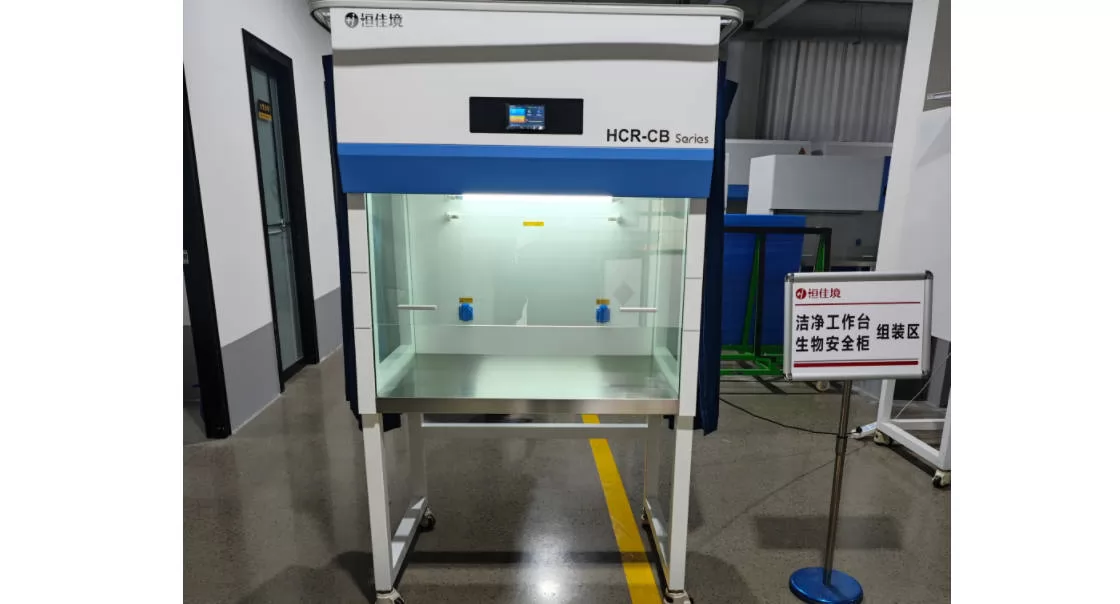
All certified Class II A2 cabinets meet the full personnel, product, and environmental protection requirements of NSF/ANSI 49:2024, validated via primary containment testing (KI-disc aerosol challenge), smoke visualization, and airflow velocity profiling. The core workspace maintains a continuous ISO 14644-1 Class 5 (Class 100) ultra-clean environment, compliant with cGMP (current Good Manufacturing Practices) for pharmaceutical testing, cell therapy manufacturing, and clinical diagnostics. This performance supports sterile cell culture, anaerobic bacterial isolation, and trace-level biomolecule detection without environmental interference.
Class II A2 cabinets are the industry-standard general-purpose biosafety cabinet for low-to-moderate hazard biological work, approved for:
These units offer low operational noise, reduced energy consumption, minimal maintenance, and the lowest total cost of ownership (TCO) for standard biocontainment applications. You can check factors affecting biosafety cabinet price for budget reference.
Per NSF/ANSI 49 and CDC biosafety guidelines, Class II A2 cabinets are PROHIBITED for handling hazardous volatile materials, including:
The 70% recirculation design causes irreversible accumulation of chemical vapors within the cabinet plenum, leading to:
Even with canopy exhaust, A2 cabinets may only be used for trace, non-hazardous volatile reagents following a formal chemical safety risk assessment (CSRA).
Class II Type B2 cabinets are total exhaust, zero recirculation biocontainment devices engineered for mixed biological and chemical/radioactive hazards, fully compliant with NSF/ANSI 49:2024 and OSHA hazardous materials regulations. All air drawn into the cabinet (inflow + downflow) is supplied from the laboratory’s dedicated make-up air system; 100% of workspace air is filtered through HEPA/ULPA and exhausted directly to the outdoor atmosphere via a hard-ducted, dedicated exhaust system—no air is recirculated into the laboratory or cabinet interior.
This design eliminates all risk of chemical, toxic, or radioactive vapor re-entrainment, providing maximum containment for high-hazard operations. B2 cabinets are classified as toxic material handling biosafety cabinets by global regulatory bodies.
B2 cabinets maintain the mandatory NSF/ANSI 49 minimum inward airflow velocity of 100 fpm, matching A2 personnel protection baselines. Critical mandatory specifications for B2 installation include:
Installation, commissioning, and airflow balancing must be performed by certified HVAC technicians and NSF-authorized biosafety professionals during laboratory construction or renovation.
Class II B2 cabinets are restricted to high-hazard, mixed-contaminant operations per CDC and WHO guidelines, including:
B2 cabinets are not intended for general biological work—their use in low-hazard applications results in unnecessary energy waste and infrastructure costs.
Prior to B2 cabinet procurement, a full facility infrastructure validation is mandatory:
Inadequate duct sizing, insufficient fan static pressure, or air volume imbalance will cause catastrophic containment failure, trigger automatic safety shutdowns, and result in regulatory non-compliance.
A2: 70% filtered recirculation + 30% filtered exhaust; supports non-ducted/canopy installation. B2: 100% total exhaust, zero recirculation; requires dedicated hard ducted exhaust to outdoors.
A2: Minimal to no ductwork; plug-and-play installation; low renovation cost. B2: Mandatory dedicated exhaust ducting, fan, and make-up air; complex installation; high upfront infrastructure cost.
A2: Excellent biological containment; no chemical/radioactive containment (trace use only with approval). B2: Maximum biological + chemical + radioactive vapor containment; approved for all mixed-hazard operations.
A2: Low energy usage; low long-term operational cost. B2: High continuous energy consumption; higher operational cost (essential for high-hazard work).
Both A2 and B2 meet NSF/ANSI 49:2024 certification. B2 provides full compliance for chemical/radioactive hazard audits; A2 is compliant for biological-only audits.
(Low budget, no extra ductwork, routine microbiology, cell culture, standard diagnostic labs)
Select A2 if your laboratory has a constrained capital budget, no pre-installed exhaust ducting, and performs only non-volatile biological work: routine microbial culture, adherent cell culture, clinical diagnostic testing, and BSL-1/BSL-2 operations without chemical hazards. A2 offers maximum flexibility, mobility, and cost efficiency for standard biocontainment needs.
(Volatile solvents, carcinogens, drug resistance strains, radioactive trace samples, full containment required)
Select B2 if your work involves volatile toxic chemicals, carcinogens, drug-resistant microorganisms, radioactive materials, or mixed biological-chemical hazards. B2 is mandatory for full regulatory compliance and personnel protection in these high-risk scenarios.
NEVER use a Class II A2 cabinet for routine volatile chemical work. Recirculated chemical vapors will accumulate in the cabinet, causing sample cross-contamination, operator chronic toxicity, corrosion damage, and immediate regulatory non-compliance.
NEVER install a Class II B2 cabinet without a fully compliant dedicated exhaust system. Inadequate airflow will destroy containment, release infectious/toxic aerosols, trigger emergency shutdowns, and create life-threatening laboratory hazards.
Leading NSF/ANSI 49 certified Class II A2 manufacturers include: NuAire (LabGard ES Series), Labconco (Purifier Class II A2), Thermo Fisher Scientific (1300 Series A2), Esco (Airstream Class II A2), and LabGard. These brands meet global performance standards, offer ergonomic design, and provide factory certification and local authorized service for annual recertification. You can view top biosafety cabinet manufacturers worldwide for brand selection reference.
Premium Class II B2 total exhaust cabinets are manufactured by Esco (Airstream B2) and NuAire (Labgard B2 Total Exhaust Series). These units feature corrosion-resistant construction, integrated pressure monitoring, interlock systems, and full compliance with chemical and radioactive hazard handling standards for high-containment laboratories.
Post-purchase, all personnel must complete manufacturer-approved training using the official operation and maintenance manual. Installation, commissioning, and annual NSF/ANSI 49 recertification must be performed exclusively by licensed, certified biosafety professionals—unqualified installation voids warranty and certification, creating severe safety risks. Refer to biosafety cabinet cleaning maintenance guide for daily operation norms.
Conduct a certified on-site evaluation: measure available exhaust airflow capacity, verify dedicated electrical load and grounding, confirm clear workspace clearance (per manufacturer specs), and validate compatibility with building HVAC and make-up air systems.
Budget for total cost of ownership: A2 has low purchase price and minimal installation cost; B2 requires significant upfront investment in ductwork, fans, and infrastructure, plus higher ongoing energy costs. Align budget with laboratory hazard level and long-term operational needs.
Validate full NSF/ANSI 49:2024 certification for all units, including factory test reports, certification labels, and compliance documentation. Reject non-certified or outdated equipment. All products comply with global infection control standards, see infection control solutions system introduction.
Schedule post-installation performance testing: full airflow velocity mapping, smoke visualization, KI-disc containment challenge, and negative pressure verification. Establish a permanent annual recertification program to maintain continuous regulatory compliance.
The selection of a Class II biosafety cabinet is a critical long-term investment in laboratory safety, data integrity, and operational continuity—not a commodity purchase. If your application falls between A2 and B2 guidelines, conduct a formal biosafety risk assessment with a Registered Biosafety Professional (RBP) and certified engineering vendor. For site-specific support, share your laboratory details, test methodologies, and hazard profiles for tailored selection guidance.
Yes—"Class 2 Type A2" and "Class II A2" are interchangeable terms referring to the same NSF/ANSI 49 certified biosafety cabinet type; Roman numerals (II) and Arabic numerals (2) denote the same Class II designation.
No—A2 and B2 cabinets have fundamentally different airflow designs, structural components, and exhaust systems. Physical conversion from A2 to B2 is impossible; a full B2 cabinet replacement + dedicated duct installation is required for high-hazard work.
Yes—per NSF/ANSI 49, B2 cabinets mandate permanent, airtight hard ducted connection to a dedicated outdoor exhaust system. Flexible ducting, canopy, or non-ducted installation is prohibited and invalidates certification.
Most BSL-2 laboratories use Class II A2 for standard biological work. Class II B2 is required only for BSL-2 labs handling volatile chemicals, toxins, or radioactive materials alongside infectious agents.
Core differences: A2 uses 70% recirculated airflow (no full chemical containment, flexible installation); B2 uses 100% total exhaust (full chemical/radioactive containment, mandatory hard ducting). A2 is for general biology; B2 is for high-hazard mixed-contaminant work.
Recap of core airflow, safety and cost differences.A2 Biosafety Cabinet: Recirculating airflow, low cost, flexible installation, biological-only containment.B2 Biosafety Cabinet: Total exhaust airflow, high infrastructure cost, mandatory ducting, maximum mixed-hazard containment. Final recommendation based on lab application and hazard level.Choose A2 for routine, non-volatile biological work. Choose B2 for work involving volatile chemicals, toxins, radionuclides, or mixed biological-chemical hazards. Always comply with NSF/ANSI 49 and CDC risk assessment guidelines. Audit your current BSC type and inspect the exhaust system without delay. Conduct an immediate review of your biosafety cabinet model, installation configuration and exhaust performance to eliminate potential safety hazards in a timely manner. Schedule annual recertification regularly and verify full compliance with global biosafety standards to safeguard laboratory personnel, experimental samples and institutional regulatory compliance.For reliable, standard-compliant biosafety cabinet solutions with professional installation and after-sales support, Jiajing Medical is your ideal trusted partner for laboratory biosafety construction and long-term risk control.


Your Name*
Your Email*
*We respect your confidentiality and all information are protected.

Discover the Top 5 Medical Air Purifier Manufacturers in China in 2026. Compare medical-grade air purifiers, hospital air purification equipment, OEM suppliers, and manufacturers.

Discover the top 10 medical air purifier manufacturers in the world in 2026. Compare medical grade air purifiers, HEPA solutions, hospital air purifiers, and global suppliers.

Compare 10 medical air purifier manufacturers in the USA, including hospital-grade HEPA, medical air purification, and professional healthcare air-cleaning solutions.