
In healthcare settings, sterile packaging is the last line of defense for infection control and patient safety. Every surgical instrument, dental tool, and disposable medical supply relies on intact, contaminant-free sterile barriers to eliminate hospital-acquired infections (HAIs), one of the most critical threats to patient recovery and clinical credibility. Even minor packaging failures can lead to microbial intrusion, compromised sterilization, and costly clinical incidents that endanger patient lives and disrupt hospital operations.
Ordinary commercial heat sealers, though functional for general packaging, fail to meet the rigorous demands of medical-grade sterilization packaging. These standard devices lack precise parameter control, cannot produce validated, consistent seals, and often create hidden defects like pinholes, weak seal lines, or delamination. Such flaws break the sterile barrier after autoclave, EO, or plasma sterilization, rendering medical supplies unsafe for clinical use.
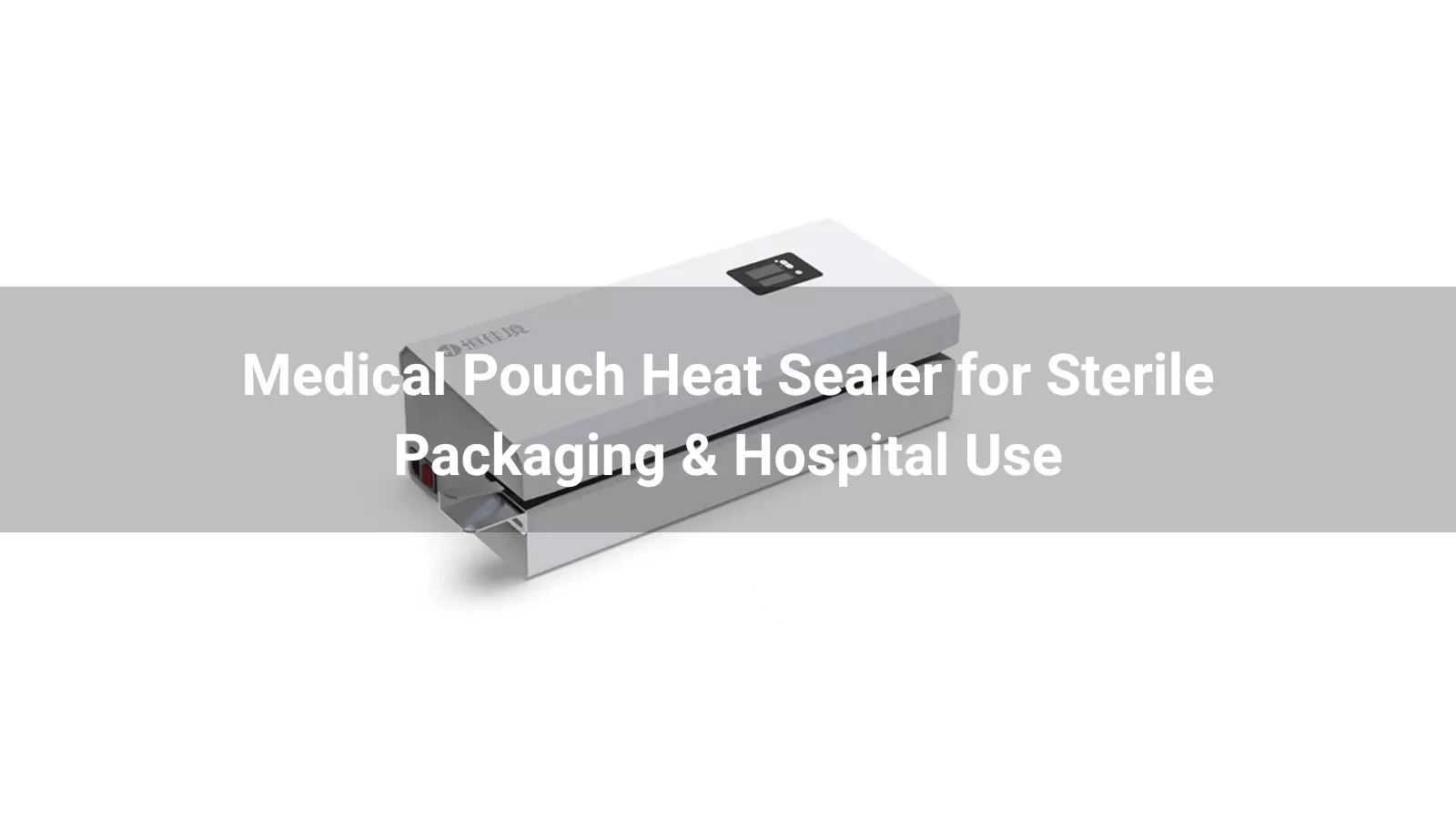
As a foundational piece of medical equipment, the medical pouch heat sealer is purpose-built to deliver validatable, leak-proof, and durable sterile packaging for all hospital sterile supply workflows. It addresses the critical gaps of ordinary sealing tools and standardizes the entire medical packaging process.
Ultimately, standardized medical heat sealing is non-negotiable for modern hospitals. It ensures full regulatory compliance, eliminates zero contamination risks, and maintains consistent, reliable sterilization results for every medical device that enters clinical service. Explore more professional sealing solutions on our medical product page.
A medical pouch heat sealer is a specialized, medical-certified device exclusively designed for heat-sealing sterile medical pouches and rolls. It is compatible with mainstream medical packaging materials including Tyvek®, medical coated paper, and plastic film laminates, and is widely used for packaging surgical instruments, dental tools, ophthalmic devices, and disposable medical supplies in hospitals, clinics, and medical laboratories. Check full specifications of professional machines at high precision medical sealing machine page.
The core working principle of this equipment lies in its three-dimensional precise control: accurate temperature regulation, uniform pressure distribution, and standardized dwell time. By stabilizing these three core variables, the sealer fuses packaging materials tightly to form a fully airtight, intact sterile seal without causing burning, deformation, or structural damage to delicate medical pouch materials.
Unlike generic commercial heat sealers, medical-grade heat sealers feature strict medical validation qualifications, traceable parameter control systems, and full alignment with healthcare sterile barrier system standards. Ordinary sealers prioritize speed and versatility for civilian packaging, while medical models focus entirely on sterility retention, seal stability, and audit compliance. Read our comparison guide: Industrial vs Medical Grade Pouch Sealers Differences.
The core value of a qualified medical pouch heat sealer is to preserve the integrity of sterile barriers throughout post-sterilization storage, transportation, and clinical preparation. It ensures that sterilized medical devices remain contaminant-free until opening for use, supporting the entire closed-loop sterile supply management system of hospitals. Our complete sterile packaging workstation solution includes matching custom CSSD packing tables and reel holders to match sealers.
Unprofessional sealing often leads to invisible defects including seal gaps, micro pinholes, and layer delamination, which allow bacteria, dust, and airborne microbes to penetrate the packaging. Professional medical heat sealers eliminate these risks by forming uniform, high-strength seal lines, completely isolating sterilized medical devices from external pollutants and effectively preventing clinical cross-contamination. All our sealing equipment belongs to integrated hospital infection control solutions.
Medical sterile packaging is subject to strict global industry regulations. Standard medical pouch heat sealers fully meet the requirements of ISO 11607, EN 16775, WHO, and WFHSS hospital sterile packaging specifications. They help hospitals pass regular health inspections, department audits, and medical qualification assessments, avoiding regulatory penalties and operational risks caused by non-compliant packaging processes.
Equipped with high-precision PID temperature control systems, professional medical sealers deliver stable, repeatable sealing results with negligible error rates. Most medical-grade models support real-time data recording and parameter storage, providing complete traceable data for hospital quality management and routine audits. This standardized, recordable sealing process is a core requirement for modern hospital sterile supply department (SPD) quality control.
Unqualified sealing leads to massive waste of medical pouches, frequent re-sterilization of devices, and repeated packaging work, which greatly increases hospital operational costs and reduces workflow efficiency. Professional medical heat sealers minimize packaging waste, eliminate rework caused by defective seals, and streamline the entire SPD packaging workflow, saving labor, time, and material costs for medical institutions in the long run.
Hospital sterile packaging involves diverse material types for different medical devices. Professional medical pouch heat sealers adapt to all mainstream medical packaging materials, including Tyvek high-barrier pouches, medical paper-plastic composite rolls, and laminated foil pouches. This wide compatibility meets the differentiated packaging needs of surgical, dental, ophthalmic, and outpatient departments. We also supply matching sterilization reel holders & cutters to coordinate with sealing machines.
The impulse medical heat sealer features low procurement cost, simple structure, and flexible manual operation. It requires no preheating waiting time and supports intermittent sealing work, making it highly suitable for small-scale medical scenarios. It is the ideal choice for community clinics, dental departments, and low-volume hospital wards with small daily packaging demands and scattered sealing tasks.
Designed for high-efficiency batch sealing, the continuous band heat sealer adopts fully automatic continuous feeding and sealing design. It delivers fast, stable sealing speed and can handle large-volume sterile packaging tasks stably for a long time. This type of sealer is widely deployed in large hospital SPDs with centralized sterile supply management and high daily packaging throughput, greatly improving overall operational efficiency. View full auto models: Automatic Continuous Rotary Heat Sealer and HCRSEAL-100 All-in-One Cut Seal Print Machine.
As an intelligent high-end medical sealing device, the validatable touchscreen heat sealer supports precise touchscreen parameter adjustment, real-time sealing data storage, and USB data export. It realizes full-process audit traceability of sealing temperature, pressure, and time, and supports equipment calibration and data archiving. It is specially customized for tertiary hospitals, standardized medical laboratories, and high-standard SPD departments with strict quality audit requirements. Browse top tier equipment ranking: Top Medical Pouch Sealer Brands & Products.
The quality of medical sterile sealing entirely depends on three core controllable parameters, which must be strictly adjusted according to packaging material characteristics to avoid defective packaging.
Temperature is the most sensitive sealing parameter. Insufficient temperature leads to under-sealing, causing incomplete material fusion and hidden leakage risks. Excessively high temperature will burn the medical pouch, cause material embrittlement, discoloration, or even seal line rupture, completely destroying the sterile barrier. Different materials require exclusive temperature settings: Tyvek pouches, medical paper-plastic rolls, and foil laminates each have independent standard temperature ranges to ensure optimal sealing effects.
Uniform sealing pressure ensures full fusion of the upper and lower layers of packaging materials. Uneven pressure results in partial weak seals and inconsistent seal line strength, which are prone to cracking during sterilization and storage. Professional medical sealers are equipped with balanced pressure systems to achieve full coverage pressure distribution, ensuring tight fusion without squeezing and deforming thin medical packaging materials.
Sealing dwell time refers to the duration of material fusion under set temperature and pressure. Standardized dwell time stabilizes the molecular structure of the seal line, improving seal toughness and durability, and supporting long-term sterile storage. Too short dwell time causes unstable seal structure and easy delamination; too long time leads to material aging and reduced barrier performance.
Wrinkled seals are usually caused by uneven material placement or unstable pressure, which can be fixed by flattening pouches before sealing and calibrating pressure components. Weak seals result from insufficient temperature or short dwell time, requiring parameter adjustment and re-verification. Seal discoloration is caused by overheating or excessive dwell time, which can be solved by lowering temperature and standardizing operation procedures. Visit our technical article library for more troubleshooting guides for medical sealing equipment.
ISO 11607-1/2 is the global core standard for medical sterile barrier systems and packaging process validation, specifying the material performance, seal integrity, and process verification requirements for all medical sterile packaging. EN 16775 is the dedicated standard for medical heat sealing equipment, regulating equipment precision, parameter stability, and safety performance for medical applications. All hospital sealing operations must comply with these two core standards to ensure sterile packaging validity. All Jiajing sealers are fully certified to meet above global medical standards, view our company introduction for full qualification overview.
Hospital quality audits require complete documentation of all sealing parameters, regular equipment calibration records, and periodic seal integrity test reports. SPD departments must archive daily sealing data, parameter adjustment records, and equipment maintenance logs to prove the standardization and traceability of the sterile packaging process, meeting medical quality supervision requirements.
The most reliable sealing operation standard is to match sealer parameters strictly with the pouch manufacturer’s Instructions for Use (IFU). Different brands and types of medical pouches have unique material characteristics and certified sealing parameter ranges. Following IFU guidelines avoids subjective parameter setting errors and ensures maximum sterile barrier stability.
Selecting a suitable medical pouch heat sealer requires comprehensive consideration of institutional scenarios, operational demands, and compliance requirements, rather than blind selection of high-spec or low-cost models.
First, evaluate daily sealing volume and department application scenarios. Large hospital SPDs with high batch output need continuous automatic sealers; scattered departments such as dental and ophthalmology are suitable for portable impulse sealers; tertiary hospitals requiring strict audit traceability must choose intelligent validatable models. Get personalized selection advice via our contact page.
Second, verify equipment material compatibility with existing in-use sterile pouches. Ensure the sealer can adapt to the hospital’s conventional packaging materials to avoid equipment idle or packaging adaptation failures.
Third, prioritize validatable and data-traceable models for formal medical institutions. Data recording, storage, and export functions are essential for hospital compliance audits and quality management system certification.
In addition, focus on operational convenience, including intuitive touch screen control, automatic cooling protection, and portable body design, which can effectively reduce operational errors and improve staff work efficiency.
Finally, choose suppliers with professional after-sales and regular calibration support. Long-term equipment calibration, maintenance, and fault debugging services ensure the stable and accurate operation of the sealer for years, avoiding equipment precision attenuation affecting packaging quality. Jiajing provides nationwide after-sales and regular equipment calibration service for all medical sealing machines, learn about our full system solutions at hospital sterile supply solutions.
Before daily sealing work, preheat the equipment sufficiently to ensure temperature stabilization, as unstable preheating will cause fluctuating sealing quality. Verify all set parameters strictly in accordance with IFU and hospital standards, and clean the sealing surface to remove residual debris and stains that may affect seal flatness.
Place medical pouches flat and neatly during operation, avoiding material overlap, folding, and excessive extrusion. Do not stack multiple layers of pouches for sealing or arbitrarily adjust parameters during continuous operation to prevent inconsistent seal quality.
After daily work completion, clean the equipment surface and sealing strip thoroughly, cut off the power supply safely, and sort and archive daily sealing parameter records and batch packaging logs to complete daily quality traceability files.
Arrange periodic professional equipment calibration to correct temperature and pressure errors regularly. Inspect pressure components, sealing strips, and transmission parts regularly, and replace worn accessories in a timely manner to maintain long-term equipment precision and operational stability. More maintenance guidance can be found in our blog: Medical Device Operation & Maintenance Blog.
Q1: Can one sealer work for all medical pouch materials?
Most professional medical heat sealers support mainstream medical packaging materials including Tyvek, paper-plastic rolls, and foil pouches, but different materials require independent parameter adjustment. A single device can adapt to multiple materials, but unified fixed parameters cannot be used for all pouch types to avoid sealing defects.
Q2: How often should medical heat sealers be calibrated?
For formal hospital SPDs and medical laboratories, quarterly calibration is recommended. For high-frequency continuous use equipment, monthly spot calibration and semi-annual full precision calibration are required. All calibration records need to be archived for audit inspection. Our team provides on-site calibration service for all purchased sealing equipment, reach out via contact us.
Q3: What causes inconsistent seal strength in sterile packaging?
Inconsistent seal strength is mainly caused by three factors: unstable equipment temperature control, uneven pressure distribution, and irregular manual pouch placement. Regular equipment calibration and standardized operational procedures can effectively solve this problem.
Q4: Is data recording mandatory for hospital sealing equipment?
Yes, data recording is mandatory for standardized hospital sterile packaging management in line with ISO 11607 and hospital quality audit requirements. Recordable and traceable sealing data is the core basis for proving packaging process standardization and sterile barrier validity.
Medical pouch heat sealers are indispensable core equipment for hospital sterile packaging systems, undertaking the key task of maintaining sterile barrier integrity, preventing cross-infection, and protecting patient safety. Unlike ordinary packaging equipment, medical-grade sealers ensure standardized, validatable, and compliant sealing results through precise control of temperature, pressure, and time, laying a solid foundation for hospital infection control and quality management. Explore our full range of certified sealing equipment at medical pouch sealer product page.
Reliable sterile packaging results rely on three key elements: qualified medical-grade sealing equipment, scientific and standardized parameter control, and complete compliance management systems. Only by matching professional equipment with standardized operation and perfect audit archives can hospitals achieve zero-risk sterile packaging.
Looking ahead, intelligent, data-traceable, and fully automatic medical heat sealers will become the mainstream of hospital SPD equipment upgrading, helping medical institutions realize more efficient, standardized, and intelligent sterile supply management. Jiajing Medical keeps innovating intelligent sealing solutions for global healthcare facilities, check our company highlights: Jiajing Medical: Infection Control Solution Pioneer.
Looking for ISO-compliant, hospital-grade medical pouch heat sealers with full validation and after-sales calibration support? Contact our team for professional scenario-based selection guidance and customized sterile packaging solutions via our contact page. Browse all related sterile supply equipment on product center to build your complete SPD packaging workflow.


Your Name*
Your Email*
*We respect your confidentiality and all information are protected.

Discover the Top 5 Medical Air Purifier Manufacturers in China in 2026. Compare medical-grade air purifiers, hospital air purification equipment, OEM suppliers, and manufacturers.

Discover the top 10 medical air purifier manufacturers in the world in 2026. Compare medical grade air purifiers, HEPA solutions, hospital air purifiers, and global suppliers.

Compare 10 medical air purifier manufacturers in the USA, including hospital-grade HEPA, medical air purification, and professional healthcare air-cleaning solutions.