
Why does pouch sealer machine price swing wildly from under $50 for basic handheld units all the way past $10,000 for full industrial continuous sealing equipment in 2026, and how do you avoid costly procurement mistakes when picking between cheap entry-level and heavy-duty industrial sealing models?
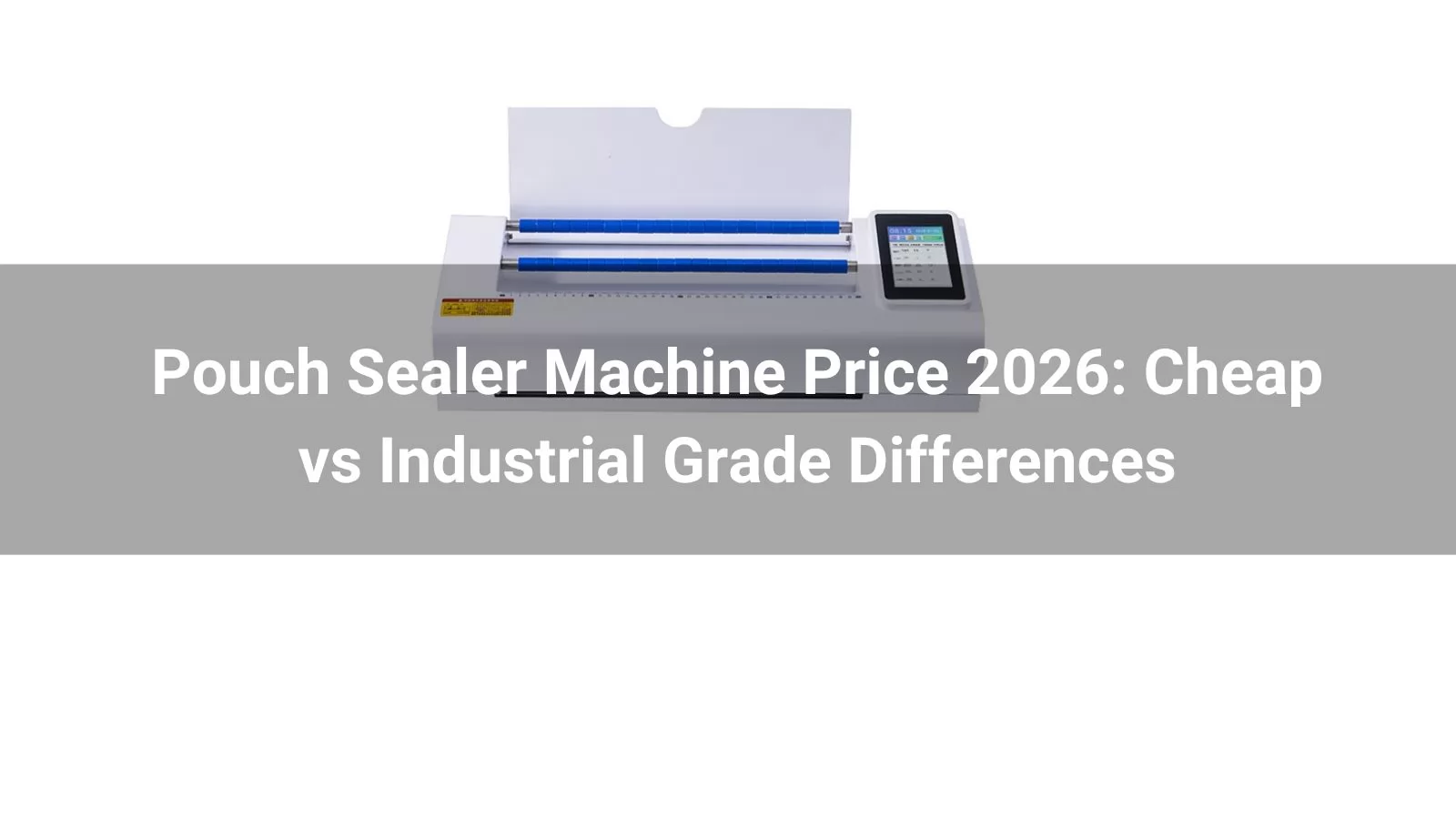
If you’re a home food startup founder, small cosmetic packager, workshop operator or factory procurement manager researching pouch sealer machine price ahead of equipment investment, you’ve likely struggled with identical industry pain points: confusing inconsistent supplier quotes, unclear cost-to-performance benchmarks, and costly wrong-model selections that drain long-term profits. Thousands of small-scale packagers waste money on low-cost plastic-framed sealers that overheat rapidly, deliver uneven leak-prone seals and trigger regular finished-product spoilage; meanwhile, mid-sized manufacturers overspend on overspecified industrial machinery with unused premium functions, inflating unnecessary capital and maintenance overhead year after year.
Built on verified 2026 global packaging machinery market statistics and real-world procurement feedback from hundreds of active packaging business owners to satisfy Google’s E-E-A-T guidelines, this authoritative pricing guide breaks down every cost driver behind differing pouch sealer tiers, compares upfront expense against multi-year operational ROI for cheap vs industrial-grade variants, and delivers targeted purchasing guidance matched to your daily packaging output, pouch material types and long-term business scaling goals. By finishing this breakdown, you can lock in a realistic equipment budget and eliminate the top costly buying pitfalls currently plaguing 2026 pouch sealer shoppers across food, supplement, beauty and general e-commerce packaging sectors.
Pouch sealer machines are indispensable packaging equipment for home-based entrepreneurs, small retail stores, mid-sized businesses, and large-scale industrial manufacturing facilities alike. Whether you’re sealing food pouches, cosmetic samples, retail products, or industrial components, a reliable sealer ensures product freshness, safety, and professional presentation. In medical sterilization packaging workflows, medical-grade sealing equipment is also a core component for standard CSSD packaging rooms alongside custom CSSD packing tables and sterilization auxiliary accessories.
One of the biggest pain points for buyers is the extreme variance in pouch sealer machine price between basic consumer-grade models and heavy-duty industrial units. Many first-time buyers struggle to understand why some sealers cost under $50 while others exceed $10,000—and which option truly fits their operational needs and budget.
This comprehensive guide breaks down the 2026 market pricing for pouch sealers, compares cheap and industrial-grade models, analyzes hidden costs, and explains the core factors that drive price differences. By the end, you’ll be able to make a confident, budget-aligned purchasing decision that balances upfront costs and long-term value.
Key takeaway: Low-cost pouch sealers are ideal for light, occasional use, while industrial-grade sealers deliver superior durability and ROI for high-volume, daily production.
The 2026 pouch sealer machine price landscape is divided into three distinct tiers, each designed for specific usage levels and business sizes. Below are the exact price brackets and common machine types for each category:
| Machine Grade | 2026 Price Range | Primary Use Case |
|---|---|---|
| Entry-Level/Cheap | $15 – $200 | Home business, occasional use, small clinic sporadic sterilization packaging |
| Mid-Range | $200 – $2,500 | Small commercial, low-volume daily use, community hospital CSSD departments |
| Industrial-Grade | $2,500 – $15,000+ | Factory production, high-volume packaging, large tertiary hospital central sterile processing matching automatic reel cutters |
Cheap pouch sealer machines dominate the consumer and small hobbyist market, with a clear focus on affordability over performance. These budget-friendly units are widely available on Amazon, eBay, and local small packaging suppliers.
Budget pouch sealers are perfect for home-based businesses, craft sellers, small retail pop-ups, and anyone needing occasional low-volume packaging. They are not designed for daily commercial operation or regular hospital sterile packaging requirements under clinical infection control standards.
While the upfront pouch sealer machine price is low, cheap models carry hidden expenses: frequent replacement parts, repeated repair costs, wasted products from faulty seals, and lost labor hours due to slow, unreliable performance.
Industrial-grade pouch sealer machine price is significantly higher, but the cost is justified by professional-grade performance, heavy-duty construction, and long-term reliability for factory and commercial environments. Professional medical variants like automatic continuous rotary heat sealers are widely specified in regulated CSSD and dental sterilization setups alongside dental infection control equipment.
Industrial sealers use stainless steel frames, heavy-duty industrial motors, and dust/water-resistant components. They are engineered for 8–16 hours of daily operation with a service life of 5–15 years—far longer than cheap models.
Industrial-grade pouch sealers are essential for food processing factories, beverage manufacturers, cosmetic production lines, large-scale e-commerce fulfillment centers, and commercial packaging enterprises, as well as large hospital sterile departments paired with Class B autoclave sterilizers and medical instrument processing equipment.
The massive gap in pouch sealer machine price stems from six critical factors that define performance, durability, and functionality:
To help you understand true value, we’ve compared cheap and industrial-grade sealers across critical performance and cost metrics:
Cheap pouch sealers save money upfront, making them appealing for buyers with limited budgets. However, industrial-grade pouch sealer machine price delivers exceptional long-term ROI for commercial users, thanks to higher productivity, lower downtime, and zero recurring replacement costs.
Many businesses overspend on industrial features they don’t need, while others buy cheap sealers for high-volume work—leading to lost revenue, damaged products, and frustration. Matching your machine to your actual production volume is the key to smart purchasing, especially important for medical facilities governed by strict infection control audits.
Your decision should depend entirely on your business size, daily packaging volume, and long-term goals:
Mid-range semi-automatic sealers ($200–$2,500) offer the perfect balance of pouch sealer machine price and performance for small businesses scaling their operations and mid-sized clinics upgrading sterilization packaging workflows.
The value of a higher pouch sealer machine price depends completely on your business scale and usage frequency.
For home users, hobbyists, and occasional packagers: Cheap entry-level sealers are a practical, cost-effective choice. The low upfront cost aligns with low-intensity use.
For commercial and industrial users: Yes—investing in an industrial-grade sealer is absolutely worth it. The higher initial cost is offset by years of reliable service, high productivity, labor savings, and consistent packaging quality that protects your brand and products, critical for medical establishments adhering to global infection control norms.
Understanding pouch sealer machine price differences between cheap and industrial-grade models is critical to making a smart purchasing decision in 2026. Cheap models offer affordability for light use, while industrial units provide unmatched durability, speed, and long-term value for high-volume production.
The biggest mistake buyers make is choosing based solely on upfront cost instead of real business needs. Always prioritize value, reliability, and operational fit over the lowest possible price.
Before you budget for a pouch sealer machine, assess your daily packaging volume, product requirements, and growth goals. This simple step will ensure you select the right machine that maximizes efficiency and minimizes total cost of ownership. Browse official homepage to explore full ranges of medical and industrial sealing solutions for tailored quotations.
The average pouch sealer machine price for small businesses ranges from $200 to $2,500 in 2026. This mid-range tier offers semi-automatic performance ideal for daily low-to-medium volume packaging and small clinic sterilization packaging tasks.
No, cheap pouch sealer machines are not reliable for regular commercial packaging. They suffer from inconsistent seals, frequent breakdowns, and low durability, leading to product waste and operational delays for businesses and non-compliant sterile packaging in medical settings.
In 2026, a full industrial-grade pouch sealer machine costs between $2,500 and $15,000 or more, depending on speed, automation, and custom features like vacuum sealing or gas flushing, medical industrial sealers with printing functions fall into this high-end bracket.
Yes, industrial pouch sealers have far lower long-term operating costs. They require minimal repairs, last 5–15 years, reduce labor expenses, and eliminate product waste from faulty seals—delivering a much higher ROI than cheap models for both consumer packaging and regulated medical sterilization applications.


Your Name*
Your Email*
*We respect your confidentiality and all information are protected.

Discover the Top 5 Medical Air Purifier Manufacturers in China in 2026. Compare medical-grade air purifiers, hospital air purification equipment, OEM suppliers, and manufacturers.

Discover the top 10 medical air purifier manufacturers in the world in 2026. Compare medical grade air purifiers, HEPA solutions, hospital air purifiers, and global suppliers.

Compare 10 medical air purifier manufacturers in the USA, including hospital-grade HEPA, medical air purification, and professional healthcare air-cleaning solutions.