
Why do 68% of endoscopy departments still risk scope damage, cross-contamination, and staff injury with non-compliant endoscope transport trolleys—even when global design standards exist? If your facility struggles with bulky carts, poor ergonomics, or unclear clean/contaminated segregation, you’re not alone.
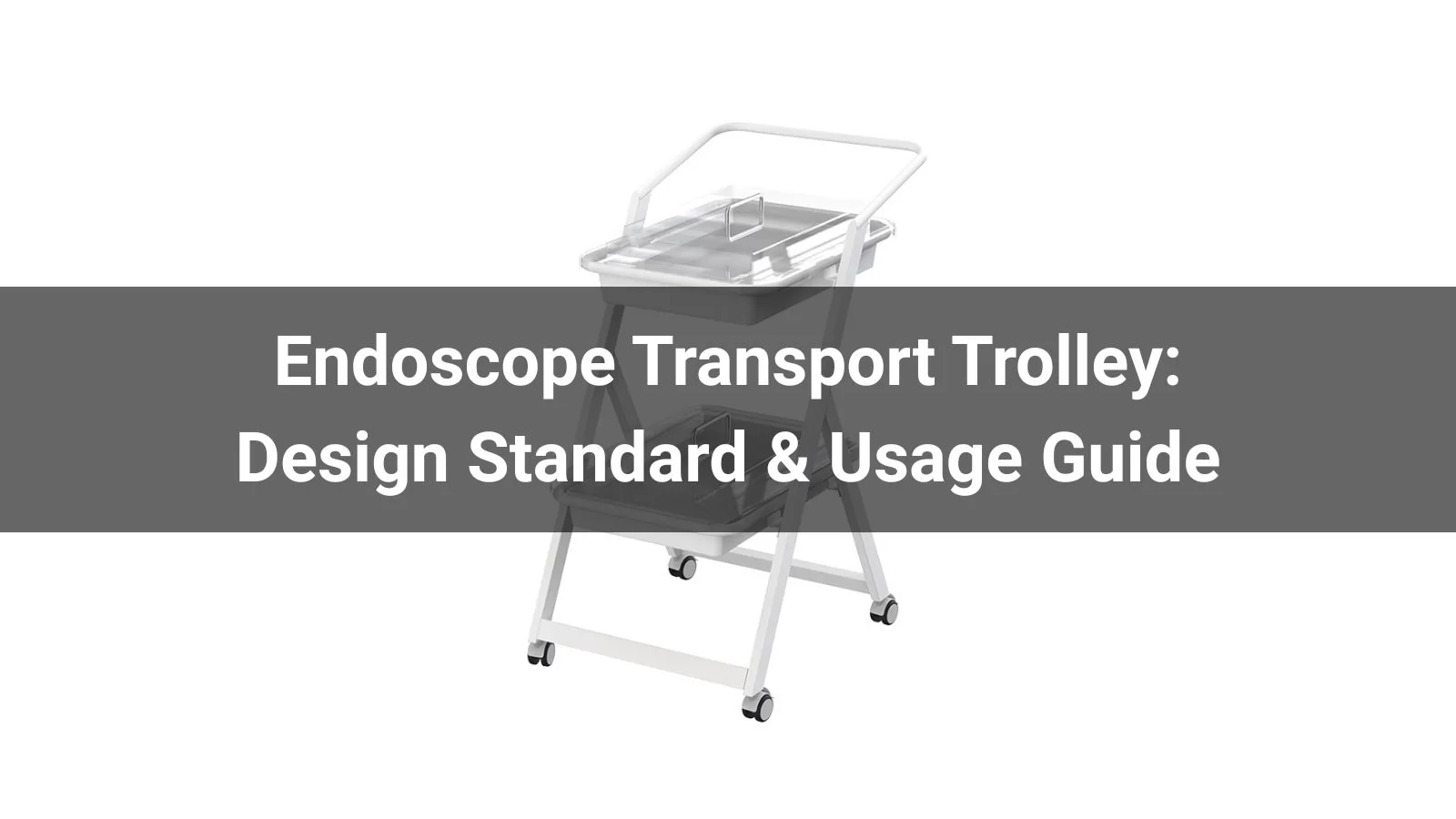
This guide cuts through the confusion: we break down ISO 13485-aligned design standards, critical usage protocols, and real-world fixes to protect your $30k+ endoscopes, meet infection control rules, and reduce nurse burnout. Whether you’re upgrading existing trolleys or selecting new ones, learn how compliant design and proper use turn transport from a hidden risk into a seamless, safe workflow.
An endoscope transport trolley, also widely known as endoscope transfer cart, medical endoscope trolley and flexible endoscope transport cart, is a dedicated mobile medical auxiliary device specially designed for safe movement, temporary storage and classified placement of rigid and flexible medical endoscopes.
Different from ordinary medical carts, this professional mobile endoscope carrying trolley is manufactured strictly following hospital infection control regulations, effectively avoiding endoscope collision damage, cross-contamination and functional failure during internal hospital circulation. It has become essential equipment in operating rooms, disinfection rooms, inpatient wards and medical clinics.
All qualified hospital endoscope storage transport trolleys must comply with global medical device safety and hygiene design norms:
Most mainstream stainless steel endoscope transport trolleys adopt high-quality 304 medical stainless steel as the main body. This material features high hardness, rust resistance, easy cleaning, high temperature and disinfectant resistance, suitable for long-term high-frequency use in disinfection rooms and sterile environments. Lightweight endoscope transfer trolley uses optimized thin-wall stainless steel and reinforced plastic accessories to realize light weight while ensuring structural firmness.
The whole vehicle is designed with moderate bearing capacity, matching the overall weight of clinical conventional endoscope sets. The overall size is optimized to smoothly pass through hospital ward doors, disinfection room passages and operating room sterile access channels, realizing flexible full-hospital mobile transfer.
Wipe the stainless steel vehicle body with neutral medical disinfectant every day, remove surface dust, liquid stains and medical residual pollutants, and keep the whole vehicle tidy.
Carry out overall spray disinfection and wiping disinfection for the whole endoscope transport trolley regularly according to hospital infection control cycle standards, focusing on dead corners of layered racks and wheel gaps.
Regularly add lubricating oil to mute universal wheels, check and fasten loose screws and structural parts, and replace damaged buffer gaskets and isolation accessories in time.
When not in use for a long time, place the trolley in a dry and ventilated sterile storage area, close the dust-proof cover, and avoid extrusion and heavy object pressing.
This series of medical endoscope trolleys are widely used in hospital endoscopy centers, surgical operating rooms, central disinfection supply rooms, gastroenterology departments, gynecological examination rooms and all kinds of private medical clinics, covering the whole process of endoscope use, disinfection, transfer and storage.
As indispensable special medical mobile equipment in modern clinical diagnosis and treatment work, qualified endoscope transport trolley directly affects the service life of precision endoscope equipment and hospital nosocomial infection control level.
Following unified design standards and standardized usage specifications can not only fully protect high-value medical endoscopes, reduce equipment maintenance costs, but also standardize hospital internal medical equipment circulation processes, improve the overall work efficiency of endoscopy departments, and create a safer and more standardized medical service environment for clinical diagnosis and treatment work.


Your Name*
Your Email*


*We respect your confidentiality and all information are protected.
Wondering how to pick compliant endoscope transport trolleys? Learn official design standards, infection control rules & safe usage tips for hospital endoscopy departments to avoid damage and cross-contamination.
Learn what a Vertical Laminar Air Flow (VLAF) Bench is, its core principles (HEPA filtration, laminar airflow), key structural components, and critical industrial applications. Solve contamination risks, meet ISO 5/Class 100 standards, and discover how VLAF benches protect samples, products, and processes—backed by industry expertise for lab managers, manufacturers, and healthcare professionals. Answers common questions like HEPA filter replacement and VLAF vs. biosafety cabinets.
Confused about Class II A2 vs B2 biosafety cabinets? This expert guide covers NSF/ANSI 49 specs, airflow differences (recirculation vs total exhaust), chemical/radioactive safety, and lab selection tips to avoid compliance failures & safety risks.