
In endoscopy reprocessing, residual moisture and poor air circulation are the top hidden causes of biofilm formation, microbial growth, and healthcare-associated infections (HAIs). For flexible endoscopes—including GI endoscopes, bronchoscopes, and procedural scopes—post-disinfection drying and sterile ventilation storage are non-negotiable compliance steps.
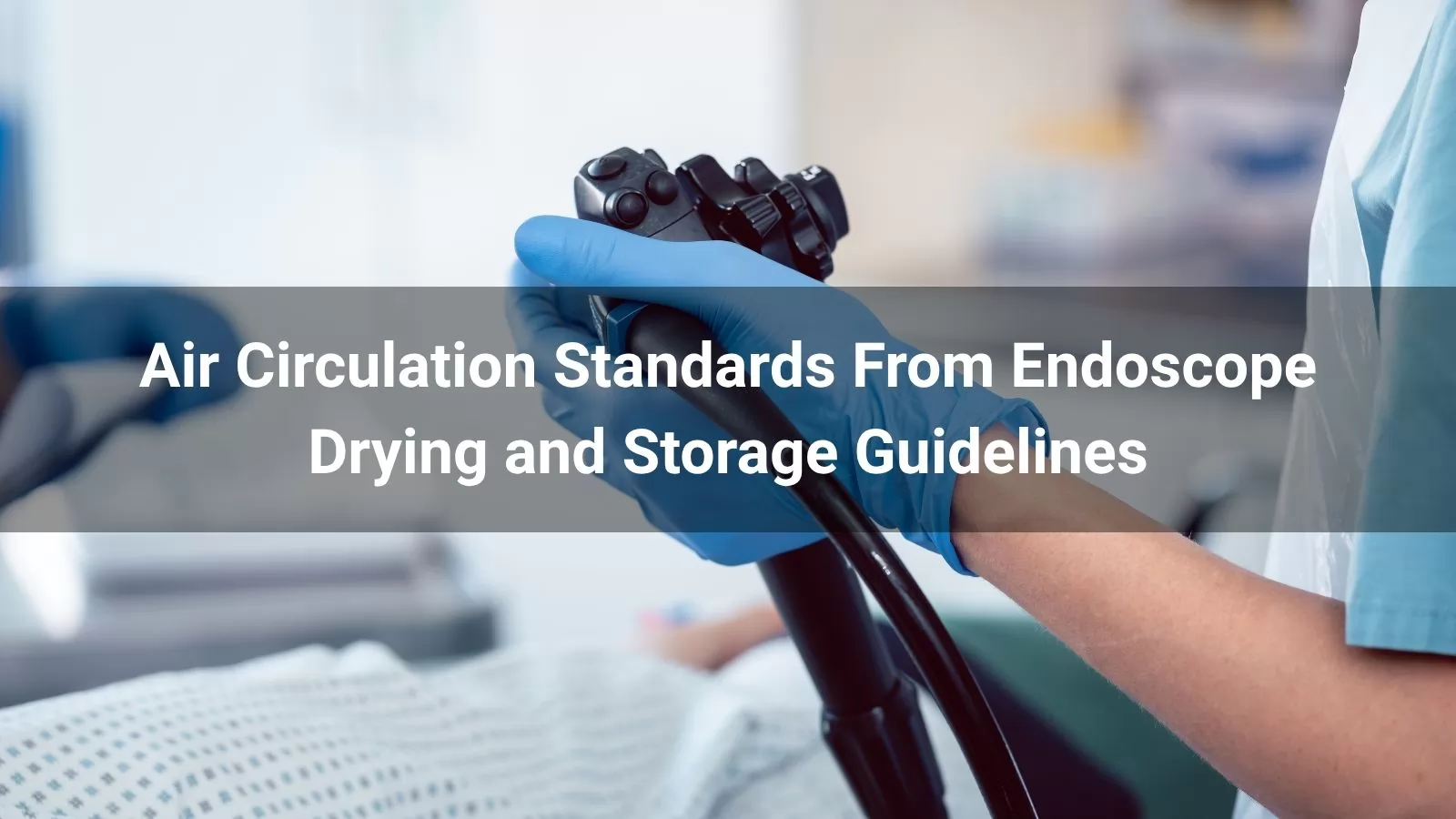
Choosing a qualified endoscope drying cabinet and endoscope storage cabinet is the core of standardized scope reprocessing, directly determining clinical infection control quality and regulatory audit pass rates. This guide breaks down official endoscope drying cabinet standards, key equipment features, brand comparisons, and compliant operational norms, covering all critical specifications for modern endoscopy departments.
Most endoscope contamination incidents stem from incomplete channel drying and unventilated storage. Manual syringe drying and static closed storage fail to eliminate residual moisture in lumens, creating a breeding ground for bacteria and fungi. Over time, persistent dampness forms stubborn biofilm that cannot be removed by routine high-level disinfection, leading to repeated clinical cross-contamination risks.
Global authoritative bodies including AAMI, AORN, WGO, and EN have unified a core rule: all reprocessed flexible thermolabile endoscopes must be stored in ventilated, filtered, continuous airflow environments. A professional scope drying cabinet and scope cabinet solves this pain point fundamentally by delivering controlled, filtered, constant positive-pressure airflow to fully dry endoscope surfaces and internal channels while isolating airborne pollutants.
Unlike ordinary medical storage devices, a qualified endoscope cabinet focuses on two core capabilities: thorough forced-air drying and long-term sterile ventilation. An endoscope dryer with standardized airflow design eliminates dead-air zones, erases residual moisture, and maintains microbial stability throughout the entire storage cycle from disinfection to clinical use.
Compliance is the primary benchmark for selecting endoscope drying and storage cabinet equipment. All mainstream clinical specifications are derived from three international mandatory standards, which define airflow quality, drying duration, pressure parameters, and filtration requirements in detail.
This standard mandates a minimum 10-minute continuous forced-air drying cycle for all endoscope channels post-disinfection. The circulating air must be either pressure-regulated instrument-quality compressed air or HEPA filter endoscope cabinet purified air (0.3μm particulate filtration efficiency ≥99.97%). It strictly prohibits manual drying and unfiltered ambient air drying, specifying active forced-air drying systems as the preferred solution for flexible endoscope reprocessing.
As the gold standard for controlled-environment flexible endoscope storage cabinets, EN 16442 requires certified cabinets to deliver continuous positive air circulation, prevent unfiltered air infiltration, and achieve complete internal and external drying of fully waterlogged endoscopes within the specified cycle. Qualified equipment can maintain endoscope microbial purity for up to 72 hours, fully compliant with long-term clinical storage needs.
AORN explicitly forbids non-ventilated closed cabinets for reprocessed endoscopes, requiring all endoscopy scope cabinets to support continuous HEPA-filtered air exchange. WGO emphasizes immediate transfer of disinfected scopes to forced-air drying equipment with uninterrupted airflow until clinical use, avoiding secondary contamination during transitional storage.
HEPA filtration is the core configuration that distinguishes professional endoscopy scope storage cabinet from ordinary storage devices. Unfiltered airflow will introduce airborne dust, bacteria, and particulates, offsetting the effect of high-level disinfection. A compliant endoscope cabinet with HEPA filter has three essential technical advantages:
First, 99.97% filtration efficiency for 0.3μm fine particles, completely blocking airborne microbial contaminants. Second, independent internal air recirculation system matching continuous positive pressure design, ensuring external polluted air cannot infiltrate the cabinet. Third, matched dual-phase airflow technology—laminar airflow removes residual fluid, while turbulent airflow eliminates adhered tiny droplets, realizing full coverage drying of endoscope channels and surfaces without dead zones.
Whether choosing endoscopy scope drying cabinets for large hospital endoscopy centers or small clinic scope storage cabinet equipment, HEPA filtration is a non-negotiable standard configuration to meet infection control requirements.
In the global medical endoscope reprocessing market, Olympus and Steris are the two most mainstream brands of professional scope cabinets, widely recognized for stable performance and full standard compliance. Understanding their product characteristics helps medical institutions rationally select equipment and control endoscope drying cabinet price budgets.
The Olympus drying cabinet, Olympus endoscope cabinet, and Olympus scope cabinet are tailor-made for Olympus scopes reprocessing workflows. The classic Olympus ScopeLocker Air series fully complies with AAMI ST91 and EN 16442 standards, supporting independent channel forced-air drying for each endoscope. The built-in high-efficiency HEPA filter ensures long-term stable air quality, while the professional endoscope storage hanger design avoids scope extrusion, airflow obstruction, and cross-contamination. The Olympus endoscope drying cabinet and Olympus endoscope storage cabinet feature intelligent automatic airflow cycles, realizing one-key drying and continuous sterile ventilation, ideal for high-frequency use in tertiary hospital endoscopy departments.
The Steris endoscope drying cabinet and Steris scope cabinet focus on high-standard contamination control and durable industrial design. Its airflow uniformity and pressure regulation systems pass strict third-party certification, effectively eliminating cabinet dead-air zones. The equipment supports 24-hour uninterrupted air circulation and real-time operational monitoring, with complete data recording functions for regulatory audits. It is widely used in large sterile processing centers that pursue ultra-high compliance standards, matching automated endoscope clean and reprocessor assembly line workflows.
Current clinical flexible endoscope storage cabinets are divided into two categories with clear compliance differences, directly affecting infection control effects:
Represented by Olympus endoscope drying cabinet and Steris endoscope drying cabinet, this type of endoscope drying cabinet is equipped with independent channel connectors, real-time HEPA air recirculation, and automated airflow cycles. It can dry each scope channel independently, maintain continuous positive pressure sterile storage, and fully meet EN and AAMI mandatory standards, being the first choice for standardized endoscopy departments.
Ordinary endoscopy scope storage cabinet with vented design and basic HEPA air exchange. It can only meet basic ventilation needs, lacks active channel forced-air drying function, and cannot guarantee complete removal of deep residual moisture. It is only applicable to low-frequency clinical scenarios and cannot replace active drying cabinets.
In daily clinical operation, many hidden dangers lead to substandard drying and storage effects, which are also key inspection points of regulatory audits:
1. Insufficient drying time: Forced-air circulation duration less than 10 minutes, failing to dry deep channel moisture thoroughly. Solution: Standardize a fixed 10+ minute mandatory drying cycle for all scope reprocessing.
2. Unqualified air source: Using non-HEPA filtered air for drying and storage. Solution: Upgrade to endoscope cabinet with HEPA filter to ensure 99.97% purification efficiency.
3. Cabinet overcrowding: Dense placement of scopes blocks airflow and forms dead-air zones. Solution: Optimize endoscope storage hanger layout to reserve sufficient air exchange space for each device.
4. Intermittent airflow: Manual shutdown of airflow during long-term storage leading to moisture re-accumulation. Solution: Enable automatic continuous airflow mode from scope placement to retrieval.
High-standard equipment requires standardized maintenance to sustain long-term compliance. Daily work must include checking cabinet positive pressure status, airflow operation, and vent/connector patency. Quarterly HEPA filtration efficiency testing and airflow uniformity verification are mandatory, with annual professional calibration of air pressure and flow rate for forced-air systems.
Timely replacement of aging filters and regular cleaning of airflow ducts can avoid secondary contamination caused by equipment aging. All inspection, testing, and maintenance records need complete archiving to cope with EN, AAMI and hospital infection control audits.
Many medical institutions take endoscope drying cabinet price as the primary selection factor, but compliance and clinical adaptability should come first. Low-cost non-standard cabinets often lack HEPA filtration, precise airflow control, and positive pressure design, bringing long-term infection risks and audit hidden dangers.
When selecting equipment, prioritize products certified by EN 16442 and AAMI ST91, match Olympus scopes reprocessing or other brand scope specifications, and select cabinet capacity and hanging modes according to daily reprocessing volume. For medium and large hospitals, high-performance Olympus or Steris series active drying cabinets are recommended; for small clinics, standard HEPA-filtered active drying cabinets that meet basic compliance can balance cost and safety.
Endoscope drying and sterile storage are the final line of defense for flexible endoscope reprocessing and infection control. To sum up, compliant clinical operations must adhere to three core principles: First, take HEPA-filtered, pressure-regulated forced air as the only qualified drying air source; Second, implement 10-minute minimum forced-air drying + continuous storage airflow; Third, prioritize active endoscope drying and storage cabinet over passive ventilated equipment, and abandon all non-ventilated static storage modes.
Standardizing the use of professional endoscope drying cabinet, endoscope storage cabinet, and supporting endoscope storage hanger systems, cooperating with regular equipment maintenance and standardized operational management, can completely eliminate residual moisture and airborne contamination risks, ensuring long-term safe and stable clinical use of endoscopes.


Your Name*
Your Email*
*We respect your confidentiality and all information are protected.

Discover the Top 5 Medical Air Purifier Manufacturers in China in 2026. Compare medical-grade air purifiers, hospital air purification equipment, OEM suppliers, and manufacturers.

Discover the top 10 medical air purifier manufacturers in the world in 2026. Compare medical grade air purifiers, HEPA solutions, hospital air purifiers, and global suppliers.

Compare 10 medical air purifier manufacturers in the USA, including hospital-grade HEPA, medical air purification, and professional healthcare air-cleaning solutions.