
Laminar flow cabinets, also known as ultra-clean benches, laminar flow hoods, or clean benches, create a localized ISO 5 / Class 100 clean environment. They draw room air through a pre-filter, pressurize it with a centrifugal fan, and push it through a high-efficiency HEPA or ULPA filter. The resulting unidirectional (laminar) airflow sweeps particles away in a uniform direction, protecting sensitive samples, products, or processes from airborne contamination.
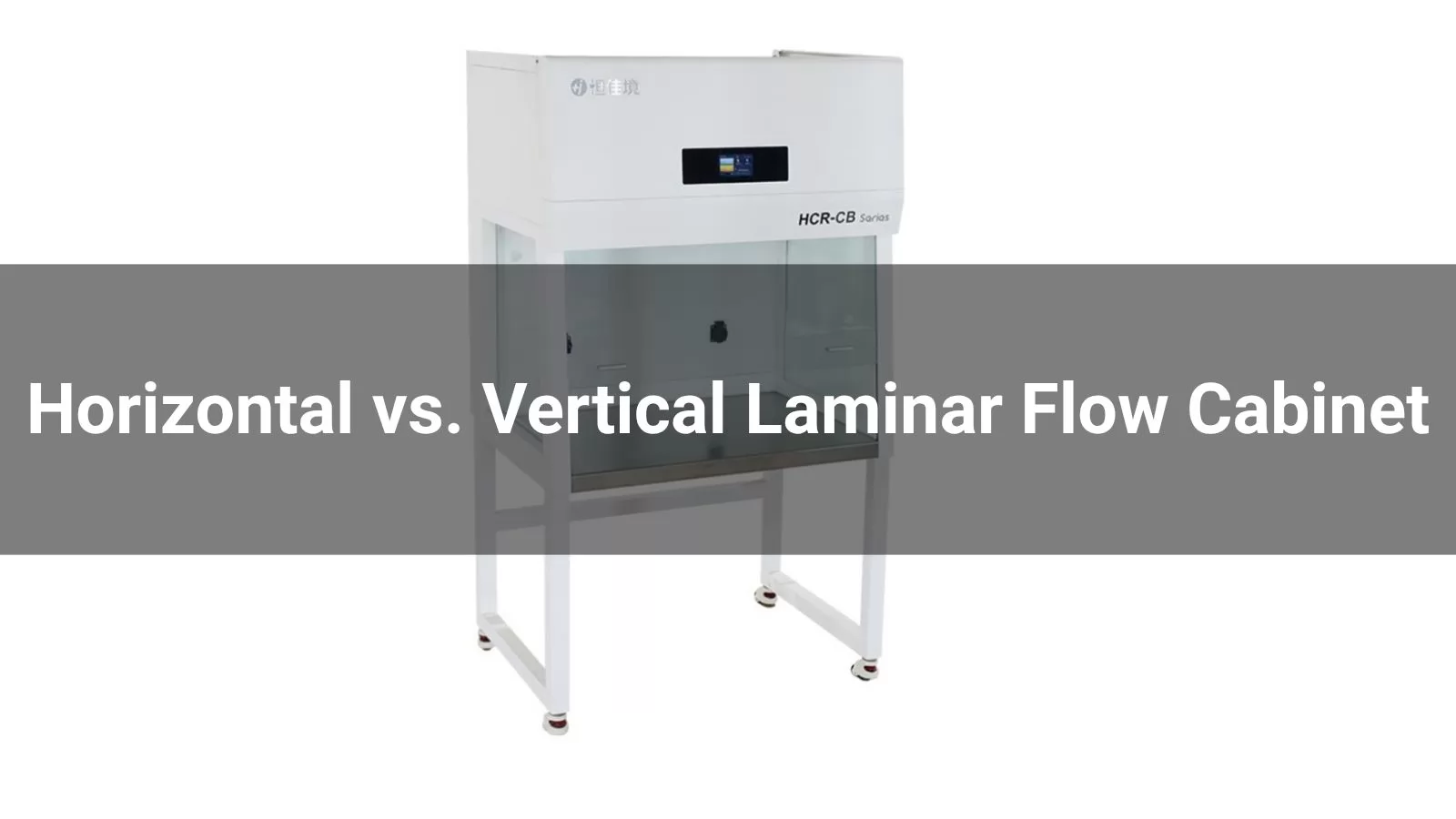
These cabinets are widely used in electronics assembly, semiconductor manufacturing, pharmaceuticals, optics, non-hazardous microbiology, tissue culture, medical device production, cosmetics, food processing, and lithium battery assembly—anywhere product protection from particulates is critical.
Laminar flow cabinets provide product protection only. They do not protect the operator or the environment from hazardous materials, aerosols, fumes, powders, or biohazards. For such applications, use a certified Biological Safety Cabinet (BSC, e.g., Class II Type A2) or chemical fume hood instead. Neither horizontal nor vertical laminar flow cabinets are suitable for BSL-2/3 work or toxic substances.
Both types use a small centrifugal fan to create positive pressure. Air first passes through a pre-filter (capturing larger particles) and then a HEPA filter (99.99%+ efficiency at 0.3 μm). The key difference lies in the direction of the filtered “First Air” — air that has just passed through the HEPA filter and has not contacted any other surface.
This airflow direction fundamentally affects turbulence levels, contamination patterns, ergonomics, workspace flexibility, and operator safety.
Design: The HEPA/ULPA filter covers the entire back wall of the work area. Clean air blows straight from back to front, parallel to the work surface.
Electronics assembly, optical inspection and assembly, non-hazardous compounding with small tools, sterile packaging of flat or low-profile items, and tasks needing minimal surface turbulence.
Design: The HEPA/ULPA filter is mounted in the ceiling. Clean air flows downward from top to bottom, bathing the entire work surface before exiting forward (often with an optional front sash or open face).
Tissue culture, media preparation, non-hazardous IV compounding, work with tall equipment (e.g., spin coaters, UV ozone cleaners), processes involving fine powders (with caution), and situations where operator comfort or safety from direct airflow is prioritized. Vertical models are often preferred when floor space is limited or large items must be accommodated.
| Feature | Horizontal Laminar Flow | Vertical Laminar Flow |
|---|---|---|
| Airflow Direction | Back → Front (horizontal, parallel to surface) | Top → Bottom (vertical, downward) |
| Filter Location | Rear wall | Ceiling |
| Turbulence on Work Surface | Lower (parallel flow) | Slightly higher (possible impingement) |
| Product Protection | Excellent (operator downstream) | Very good |
| Operator Safety (from airflow) | Lower (air blows toward face) | Better (air directed downward/away) |
| Cross-Contamination Risk | Higher downstream of items/equipment | Lower between side-by-side samples |
| Suitable for Large/Tall Items | Limited (causes turbulence) | Excellent (more working height flexibility) |
| Footprint/Depth | Deeper (more floor space) | Shallower (compact) |
| Filter Access | Rear (less convenient) | Top (easier) |
| Best For | Small items, precision assembly, minimal turbulence | Tall equipment, powders (cautious), space-limited areas |
Choose based on these key factors:
In low-contaminant or small-sample scenarios, vertical models are frequently sufficient and more cost-effective. For ultra-strict cleanliness requirements with small items and minimal turbulence, horizontal excels.
Both horizontal and vertical laminar flow cabinets deliver reliable product protection when used correctly with non-hazardous materials. The “best” choice depends on matching the airflow pattern to your specific process, equipment size, contamination risks, operator safety needs, and available space.
Perform a thorough risk assessment of your application, consult cleanroom requirements, and consider vendor guidance or professional site validation for optimal performance. If your work involves any hazardous substances or requires personnel and environmental protection, a laminar flow cabinet is not appropriate — opt for certified containment equipment instead. This ensures both the integrity of your work and the safety of your team.
Explore more professional solutions on our official blog and product page.


Your Name*
Your Email*
*We respect your confidentiality and all information are protected.

Compare horizontal vs. vertical laminar flow cabinets for your 2026 lab setup. Learn the key differences in airflow patterns, operator safety, and application suitability (cell culture vs. electronics). Choose the right ISO-compliant clean bench to ensure sterile integrity and optimize your workflow.

This detailed step-by-step guide to cleaning a biosafety cabinet (BSC) covers all standard operating procedures (SOPs) from preparation and sterilization sequence to the use of ultraviolet light.

Updated 2026 list of the 10 Best Vacuum Sealers. Expert reviews, key features, pros & cons, and buying advice to pick the best food sealer for your kitchen.