
A biological safety cabinet (BSC), specifically a Class II biological safety cabinet, is a ventilated laboratory enclosure designed to provide personnel, product, and environmental protection when handling biohazardous materials. Class II BSCs are the most widely used type in microbiology, cell culture, clinical research, pharmaceutical compounding, and biotechnology laboratories. Among Class II models, the Type A2 is the most common variant due to its balance of safety, flexibility, and cost-effectiveness.
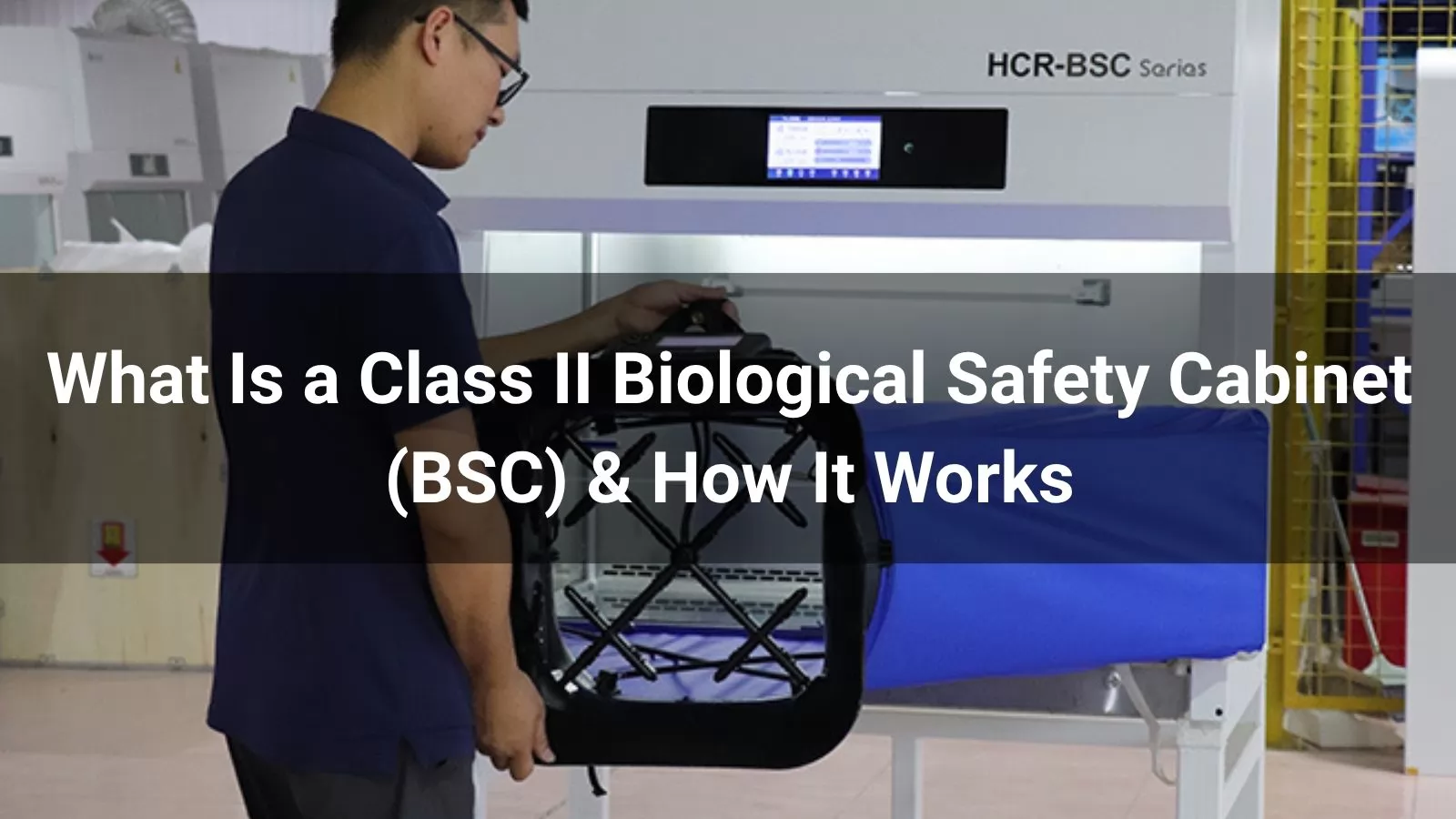
Class II, Type A2 BSCs draw room air inward through the front opening at a minimum average inflow velocity of 100 feet per minute (fpm, or 0.51 m/s). This creates an air curtain that prevents aerosols from escaping toward the operator. Inside the cabinet, air is drawn under the work surface and into a rear plenum. A blower then divides the air: approximately 70% is recirculated through a HEPA filter as vertical unidirectional (laminar) downflow over the work surface, while the remaining 30% is exhausted through another HEPA filter. The downflow provides an ISO Class 5 (or better) clean environment that protects the product from external contamination and minimizes cross-contamination between samples. The exhaust air, also HEPA-filtered, can be released back into the room or, when handling minute quantities of volatile chemicals, connected to the building exhaust via a canopy (thimble) connection for added safety.
This airflow pattern—combined with negative-pressure plenums (or plenums surrounded by negative pressure in modern designs)—delivers the three essential protections of a Class II BSC:
HEPA filtration is central to BSC performance. High-Efficiency Particulate Air (HEPA) filters trap microorganisms and other particulates effectively, maintaining the required cleanliness and containment.
Class II BSCs, including Type A2 models, are designed and tested to meet rigorous international standards. In the United States, NSF/ANSI 49 governs the design, construction, performance, and field certification of Class II biosafety cabinetry. This standard specifies requirements for airflow velocities, HEPA filter integrity, containment, and leakage testing. In Europe, EN 12469 sets performance criteria for microbiological safety cabinets, focusing on similar aspects of design and protection. Cabinets are typically certified by accredited third-party organizations, and they must undergo annual field certification (or after relocation, filter replacement, or major maintenance) by qualified technicians to verify continued performance.
Compliance with these standards ensures that Class II biological safety cabinets reliably contain agents assigned to Biosafety Levels (BSL) 1–3 and, in some cases, support work with trace amounts of volatile chemicals when properly configured.
Class II BSCs are indispensable in settings where both containment of biohazards and maintenance of sterility are required. Common applications include:
They are not suitable for high volumes of volatile or toxic chemicals (Type B cabinets are preferred for those) or for work requiring maximum containment (Class III BSCs are used for BSL-4 agents).
Modern Class II Type A2 BSCs often incorporate energy-efficient ECM or DC motors that reduce power consumption, heat output, and HEPA filter loading while maintaining stable airflow. Advanced control systems monitor inflow and downflow velocities in real time, with alarms for deviations. Ergonomic designs include sloped sashes for better visibility and posture, adjustable work surfaces, armrests, and noise-reduction features to support long working sessions.
Regular maintenance is critical for sustained performance. Key practices include:
Proper installation—away from drafts, doors, and high-traffic areas—is also essential to maintain the air barrier.
A Class II biological safety cabinet (BSC) represents a critical engineering control that enables safe, reliable work with biological materials. By integrating precise airflow dynamics, robust HEPA filtration, and compliance with NSF/ANSI 49 and EN 12469 standards, these cabinets deliver triple protection for personnel, products, and the environment. Whether in academic research, clinical diagnostics, or pharmaceutical production, a well-maintained Class II BSC supports scientific progress while upholding the highest standards of laboratory safety.
For specific models or installation guidance, consult manufacturers or certified professionals, and always follow institutional biosafety protocols and the latest edition of the CDC’s Biosafety in Microbiological and Biomedical Laboratories (BMBL).


Your Name*
Your Email*
*We respect your confidentiality and all information are protected.

Understand the Class II Biological Safety Cabinet (BSC): How laminar airflow and HEPA filtration protect personnel, products, and the environment. Explore the 2026 technical breakdown of air curtains, recirculation patterns, and ISO-compliance for BSL-2/3 labs.

Let's be brutally honest: 95 % of labs that think they need a B2 actually don’t. They end up spending 2–4× more upfront and 5–10× more in operating costs over the cabinet’s lifetime — all because someone once heard “B2 is safer” without understanding the nuance.

Compare horizontal vs. vertical laminar flow cabinets for your 2026 lab setup. Learn the key differences in airflow patterns, operator safety, and application suitability (cell culture vs. electronics). Choose the right ISO-compliant clean bench to ensure sterile integrity and optimize your workflow.